Turning CO2 and desalination brine into carbon-negative building materials
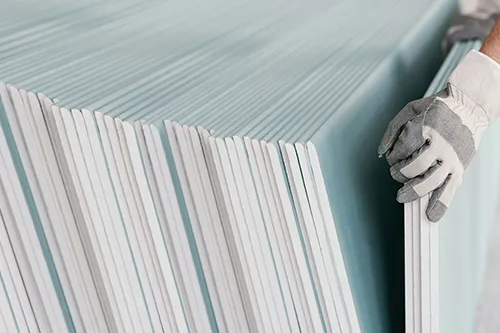
Carbonate Plasterboard
The project aimed to develop a sustainable alternative to conventional gypsum plasterboard by mineralizing CO2 into magnesium carbonate binders. It sought to scale nesquehonite production from laboratory to pilot scale using locally available waste streams such as desalination brine and industrial CO2. A key objective was to optimize process economics and environmental performance by replacing pure alkalis with industrial by-products such as cement kiln dust. The project also targeted the production and validation of plasterboard prototypes meeting industry performance requirements. Finally, it aimed to establish a techno-economic and life-cycle basis for future commercialization in Qatar.
Methodology
Laboratory and pilot-scale continuous stirred tank reactors were used to optimize yield, phase purity, and reaction efficiency. Mechanical, microstructural, and durability testing were conducted alongside life-cycle and techno-economic assessments. A pilot plant was designed, built, and operated to demonstrate scalability and process integration.
Outcomes
The project successfully demonstrated a pilot-scale carbonate plasterboard production process achieving over 90% CO2 absorption efficiency and up to 40% cost reduction through alkali substitution. Nesquehonite-based binders with mechanical performance comparable to or exceeding gypsum plasterboard were produced, and a carbon footprint approaching net-negative values was verified through LCA. The technology reached Technology Readiness Level 5–6, a patent application was filed, and multiple scientific publications and conference presentations were produced.
Expected Impact

A promising avenue for carbon capture which would take advantage of large volume buildings and construction market.
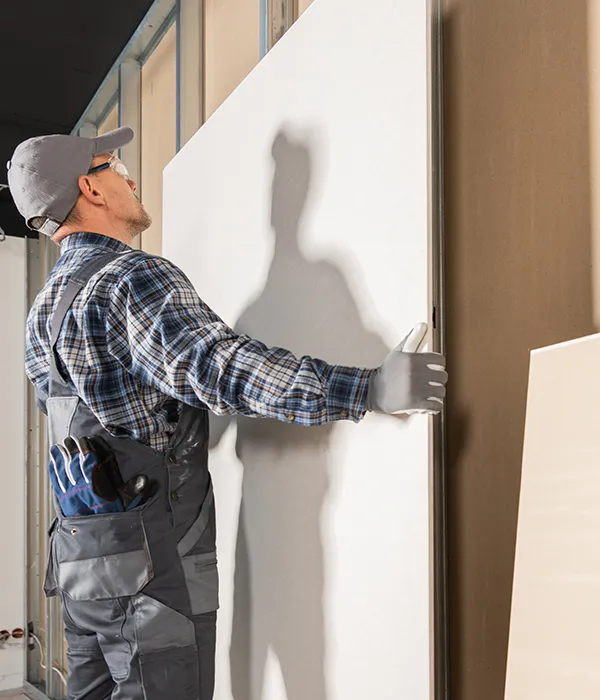
Employs the principles of circular economy to formulate a sustainable material, made from local Qatari resources and wastes, which substitute imported commodities such as plasterboards.
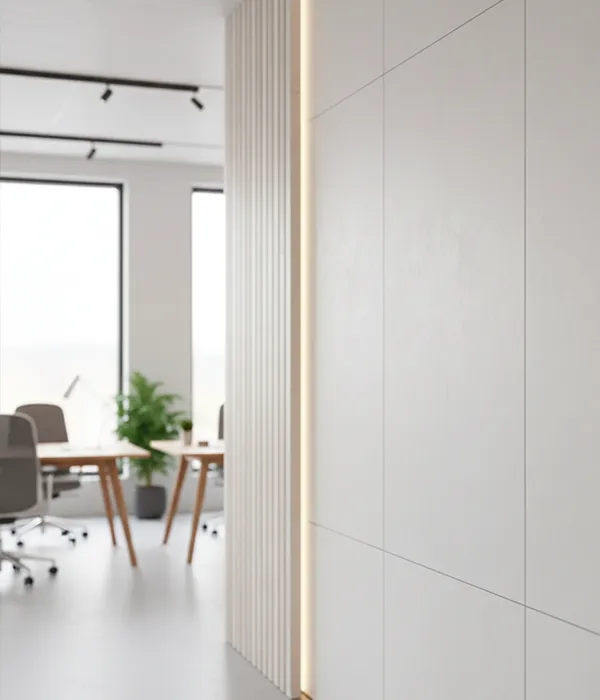
Functional products which are designed to be competitive materials, by replacing carbon intensive materials and creating added value.
Project ID
Carbon Capture & Storage (CCS) for Small-Scale Gas-Fired Combined Heat and Power (CHP) Schemes
2017-2021 | NPRP10-0216-170475
Carbon Capture, Storage and Utilisation: Building Material Products from Seawater Brine and Waste
2022- 2025 | NPRP14S-0418-210229
Carbonate Plasterboard: Development of a Locally-Sourced and Carbon-Negative Construction Material
Collaborators
EMPA
IMDEA
Tecnalia
Umm Al Houl