
GORD Institute Research Pillars
The Five Cornerstone Pillars
Industrial Decarbonization
Eliminating the carbon footprint of "hard-to-abate" sectors where electricity isn't enough.
GORD’s work on low-carbon CSA cement directly reduces emissions by replacing traditional Portland cement with alternatives that require lower kiln temperatures and emit significantly less CO₂ during production. To further optimize this process, GORD is leveraging Cemento AI, an advanced digital platform that utilizes artificial intelligence to enhance the formulation and production efficiency of low-carbon cement. In parallel, research on fuel and carbon efficiency in cement manufacturing focuses on optimizing kiln operations, integrating alternative fuels, and improving material efficiency – collectively minimizing both energy consumption and process-related emissions.
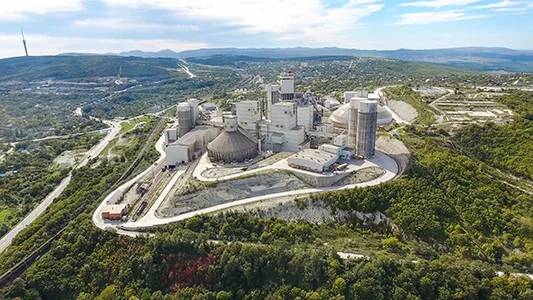
Complementing these technical innovations is the “Environmental Performance Information for Construction: Digitalization and Traceability Applications” (EPIC-DATA) project, which focuses on developing and enhancing Life Cycle Assessment (LCA) databases and supports the development of Digital Product Passports for carbon accounting, ensuring alignment with international Carbon Border Adjustment Mechanism (CBAM) requirements.
Together, these innovations target one of the most carbon-intensive industries, aligning closely with the goal of deep industrial decarbonization.
Circular Economy
Closing industrial loops by transforming waste streams into high-value precursor materials. It helps to replace "linear" resource consumption with a "zero-waste" manufacturing ecosystem.
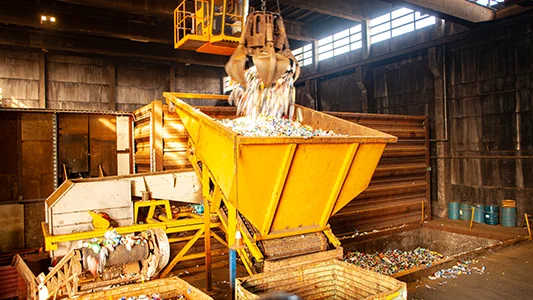
GORD’s development of biodegradable biomass-based PEF (polyethylene furanoate) offers a sustainable alternative to fossil-based plastics, reducing reliance on virgin petrochemicals while ensuring end-of-life biodegradability. Research into nano-materials derived from industrial and agricultural waste converts low-value byproducts into high-performance materials for construction and other applications. Additionally, the recycling of reject brine to produce magnesium carbonate transforms desalination waste – a major environmental challenge in the region – into commercially valuable products, effectively closing resource loops and advancing circular manufacturing systems.
Climate Resiliency
Engineering survival, stability, and human comfort specifically for extreme hot-arid environments.
GORD’s hybrid ultra-efficient cooling system SYNERGIA9n1 is specifically designed for high-temperature regions, combining advanced thermodynamic cycles and smart controls to significantly reduce energy demand while maintaining indoor comfort. This is critical in regions where cooling accounts for a large share of electricity consumption. Meanwhile, carbon capture and utilization (CCU) technologies not only reduce emissions but also enhance resilience by enabling industries to adapt to stricter carbon regulations and climate constraints. Together, these innovations help create built environments that are both climate-adaptive and resource-efficient.

Energy Transition & Decarbonized Power
Developing the energy vectors and storage systems needed to transition away from hydrocarbon dependency.
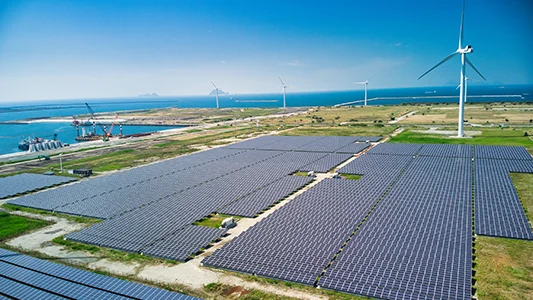
GORD’s research into Sustainable Aviation Fuel (SAF) addresses one of the most challenging sectors to decarbonize, aviation, by providing lower-carbon fuel alternatives compatible with existing infrastructure. At the same time, work on next-generation battery storage systems supports the integration of renewable energy sources such as solar and wind by solving intermittency challenges. These storage solutions enhance grid stability and enable a higher penetration of clean energy, making them essential for a successful energy transition.
Sustainable Urban Transformation
Reimagining how cities are built and regulated using data-driven standards and digital transformation.
GORD’s research on 3D additive manufacturing performance explores how advanced construction techniques can reduce material waste, improve construction efficiency, and enable innovative, low-carbon building designs. Studies on energy efficiency in buildings focus on optimizing building envelopes, systems, and operations to significantly cut energy consumption in the built environment. Additionally, GORD’s leadership in sustainability standards and best practices, including frameworks like GSAS, provides data-driven guidelines and certification systems that help cities and developers systematically achieve sustainability goals. Together, these efforts drive the transformation toward smarter, greener, and more resilient urban ecosystems.