Capturing light and heat for improved solar efficiency

Hybrid Solar PV–Thermoelectric Power System

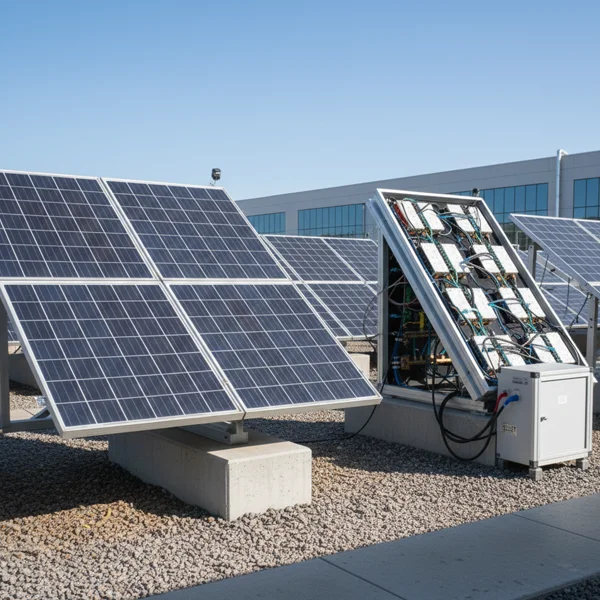
The project aimed to increase solar-to-electric conversion efficiency by integrating photovoltaic (PV) cells with thermoelectric generators (TEGs). It sought to reduce PV efficiency losses caused by high operating temperatures while converting otherwise wasted infrared radiation into usable electrical power. The work focused on designs suitable for Qatar’s extreme climate conditions, including high solar irradiance, heat, and dust. A further objective was to develop scalable, commercially viable hybrid systems. Intellectual property protection was also a core goal.
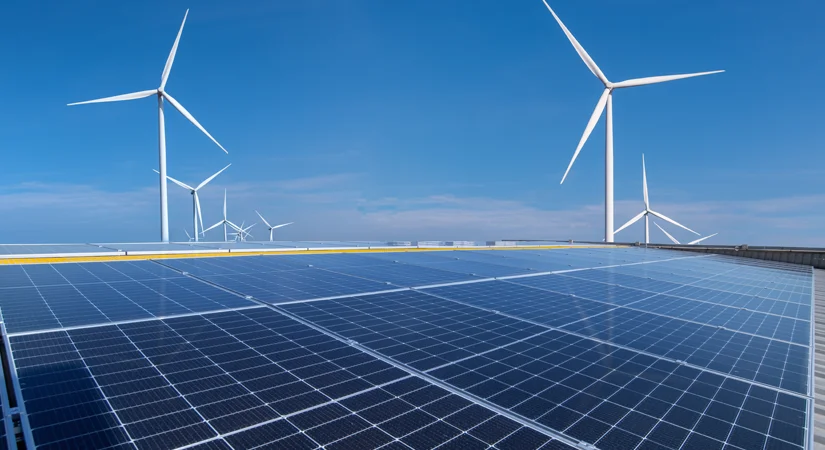
PV panel

Methodology

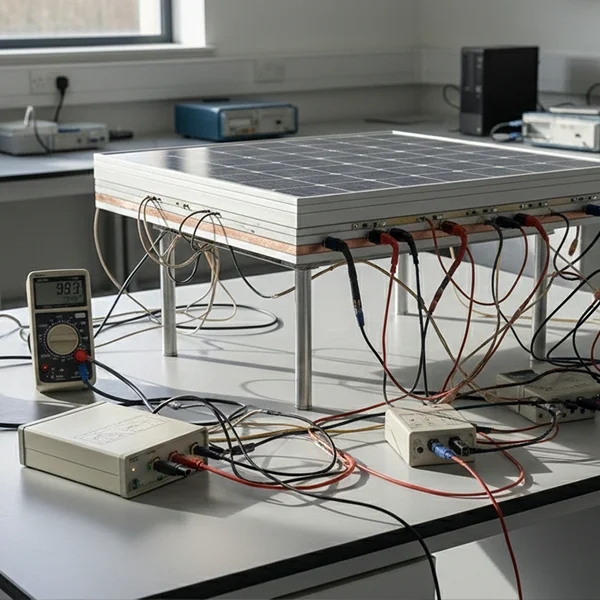
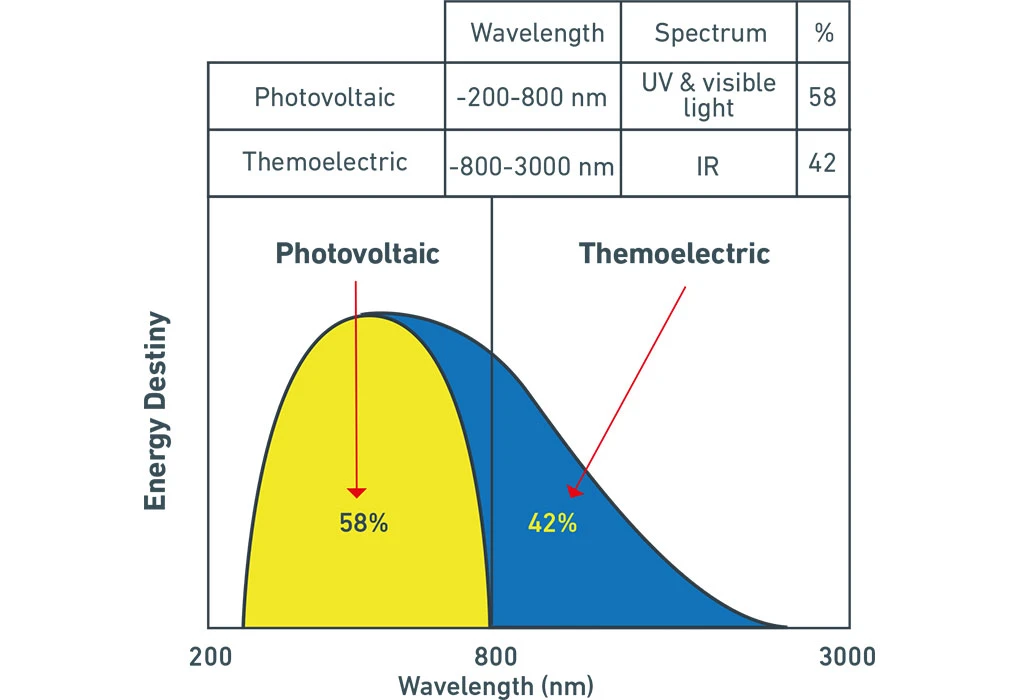
The project combined optical spectrum splitting, thermal management, and hybrid system integration. Cold mirrors and beam splitters were used to direct visible light to PV cells and infrared radiation to TEGs. Finite-element simulations guided absorber material selection, thermal concentration, and system geometry. Laboratory testing employed solar simulators and climate chambers, followed by extensive outdoor field testing in Qatar. Multiple configurations were evaluated, including water-cooled PV/T systems, air-cooled PV-TEG hybrids, bifacial PV designs, and spectrum-splitting architectures.
photovoltaic graph

Outcomes

The hybrid PV-TEG systems demonstrated up to ~20% improvement in PV power output through thermal management, with additional electrical generation from TEGs. Spectrum-splitting and bifacial PV designs achieved substantially higher overall energy yield than conventional PV systems. Two system designs were filed for international patent protection. The results showed strong potential for commercialization in hot-climate regions.

Project ID

2011–2015  |  NPRP 5-363-1-069

Collaborators

Fraunhofer Institute for Physical Measurement Techniques (Fraunhofer IPM), Germany