
Biomass Valorization for the Next Generation of Fuels
Sustainable Aviation Fuels
Design and develop electrochemical pathways that can convert waste biomass-derived molecules into high value sustainable aviation fuel (SAF) precursors. The project aims to demonstrate feasibility by scaling production to the gram level and beyond, paving the way for commercial renewable electrochemical technologies aligned with Qatar’s vision for energy diversification and sustainable development.
Methodology
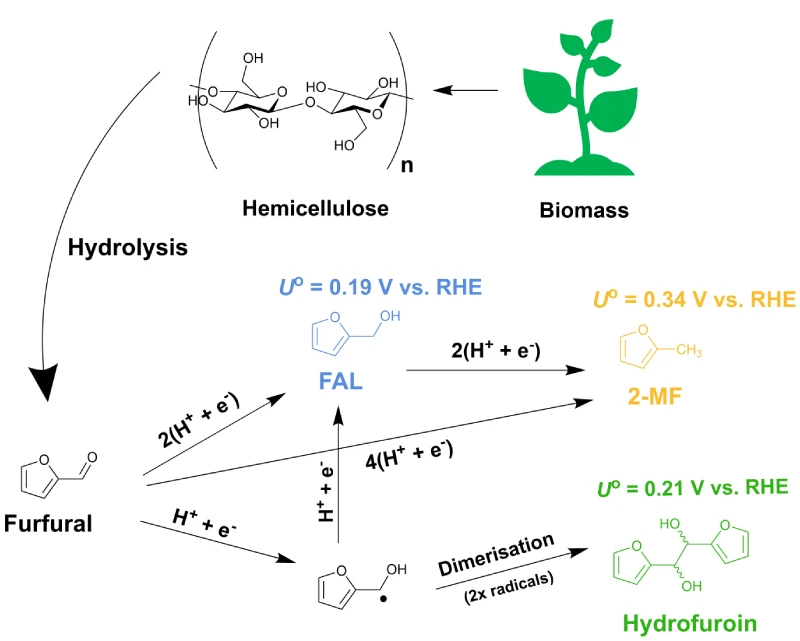
The process uses electrochemistry to convert common chemicals which come from biomass such as leaves, food waste etc to sustainable fuel cells. A big part of the project is this process can produce a variety of chemicals. They are all valuable products but selectivity and purity of the chemicals is an issue.
Due to this the project also focuses on developing novel electrochemical catalysts that target specific reactions and products and in this case a precursor to sustainable fuels such as kerosene.
Outcomes
- Successful development of the novel electrochemical catalyst that shows 96% Faradiac Efficiency in producing hydrofuroin a precursor to sustainable aviation fuels.
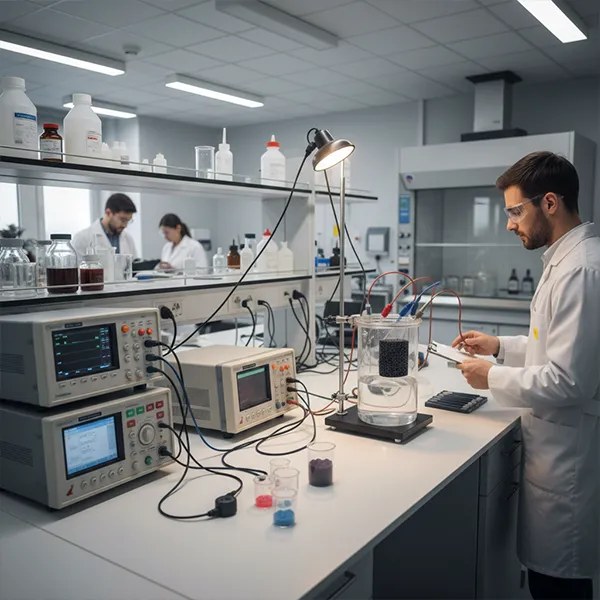
- A demonstrated laboratory scale electrochemical production process of characterised Hydrofuroin.
- On-going work includes production scale up and optimization, refinement and hydrogenation of fuel precursors and characterization of fuel properties against established ASTM standards.
Expected Impact

Aviation Impact
Provides a low-carbon, scalable route to SAFs, addressing one of the hardest-to-decarbonize industries
Technological Innovation
Advances the field of nitrogen- and metal-doped carbon nanomaterial electrocatalysts, establishing Qatar’s leadership in electrovalorization

Economic & Environmental Impact
Transforms waste biomass into value-added products, reducing dependence on fossil-derived fuels while adding commercial value through circular economy principles.